Bellevue prides itself as a community that values public safety, environmental stewardship, and accessibility. As a city that welcomes the world and understands the worth of all who live, work, or visit, Bellevue deserves a transportation network that keeps everyone safe and moving. That’s why our City Council has unanimously supported Vision Zero – the promise that nobody will be killed or seriously injured on our streets by 2030.
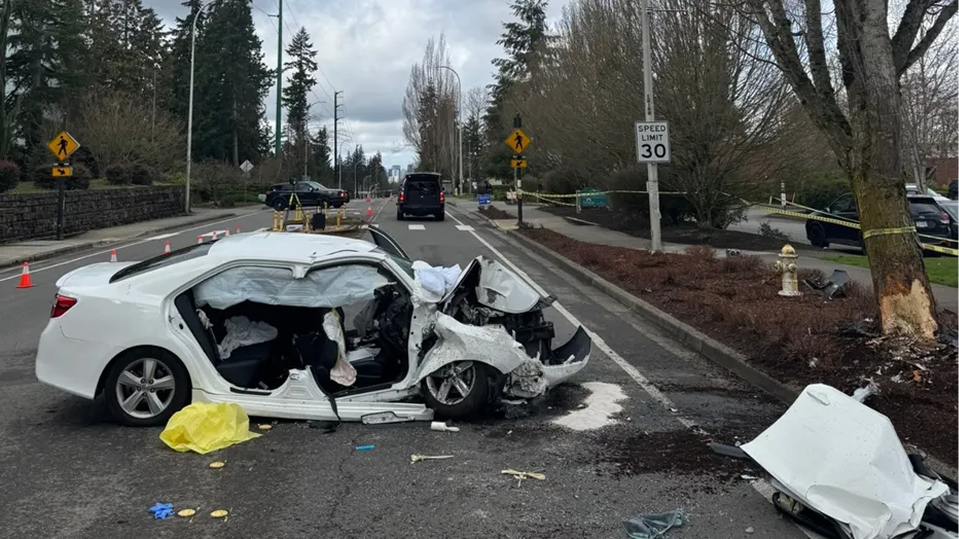
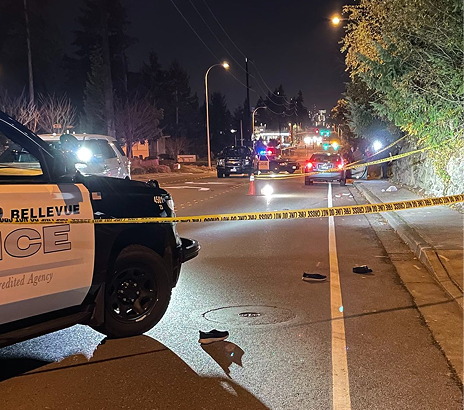
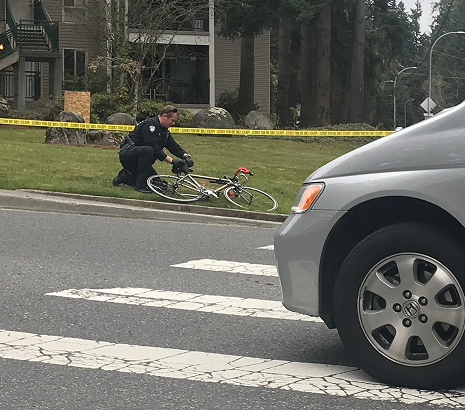
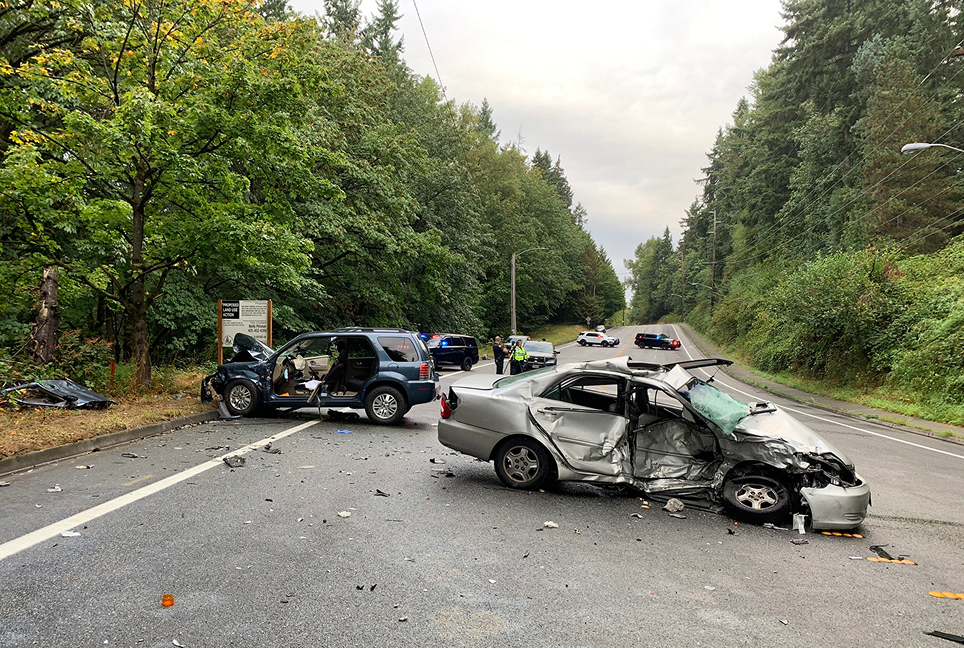
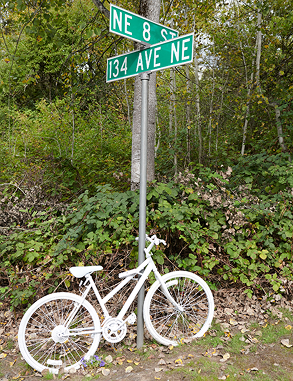
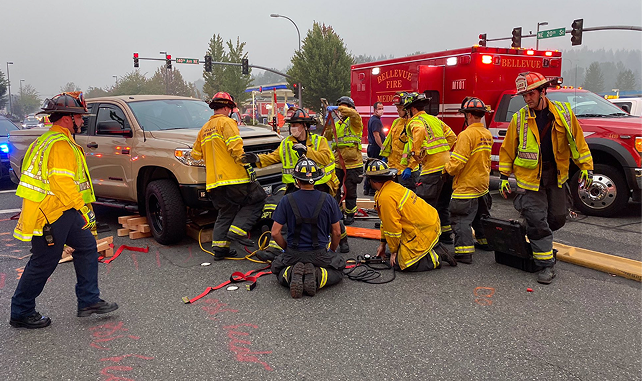
However, the current reality is far from this vision. In 2025, a record-high 41 people lost their lives or were seriously injured on Bellevue streets. This included 27 people in motor vehicles, 9 people walking or rolling, and 5 people on bikes. Every single one of these people is loved by somebody. Every single one of these people should still be here and whole.
Our Proposal to Fix Things
To ensure the safety of everyone in Bellevue, our community deserves urgent action from our elected leaders and transportation professionals. This urgency must be reflected throughout Bellevue’s upcoming budget, including in any new transportation revenues that leaders choose to pass.
The Streets Are For Everyone (SAFE) Bellevue coalition formed in 2025 specifically to bring a community voice to Bellevue’s street safety discussions. SAFE Bellevue comprises over 20 nonprofits, community-based organizations, and businesses whose interests range from accessible mobility to environmental stewardship to racial equity and more. Bellevue leaders are considering levying new transportation revenues that could generate up to $13 million per year in additional funds, and our coalition supports this move. Keeping everyone in Bellevue safe on our streets will require significant new investment – but if deployed strategically, these funds can generate rapid results that will turn the tide and save lives.
Our coalition has developed a proposal for what we would like to see new revenues from a Transportation Benefit District fund within Bellevue’s transportation budget. In addition to our coalition’s Shared Values, our proposal is guided by the following principles:
- Our transportation system should keep everyone safe, full stop. Safety must be priority number one, and the city should not design or build projects that encourage high speeds, unsafe conditions, or more driving.
- Funds should go towards the infrastructure and programs that will have the biggest and/or most urgent benefits to safety.
- New revenues will be paid by everyone who lives in, works in, or visits Bellevue. Therefore, infrastructure built by new revenues should benefit everyone in Bellevue by being built throughout the entire city.
How to Read This Proposal
This document should be interpreted as how our coalition would like to see new revenues allocated – it should not be interpreted as our outcome for Bellevue’s total transportation budget nor as a full accounting for Bellevue’s existing budget. If existing revenues already fund a program that we list in this proposal, we are asking that new revenues be used to add to the total fund for a program, not for existing revenues to be replaced by new revenues.
As a part of an internal restructuring process, the City of Bellevue’s Transportation budget is divided into overarching “buckets” that support different objectives (e.g. Bike & Ped Mobility, Neighborhood Mobility, Vehicle Mobility, etc.). Our proposal follows this framework by allocating certain percentages of new revenues into these categories. Within each “bucket”, we provide a selection of projects and programs that our coalition views as priorities within that category. These lists are not meant to be exhaustive but rather serve as a set of items that have emerged during coalition discussions as community priorities. Our coalition supports whatever administrative or financial tools are needed to advance these projects and programs as rapidly as possible within Bellevue’s budget and workplan.
Neighborhood Safety & Mobility
Emergency Streets Pilot
Emergency Streets are a novel approach to crash management which treats street safety as a public health crisis. After a fatal crash, speed reductions and lane rechannelizations are piloted immediately at the crash location so that data can be collected and impact measured. The program increases community awareness of fatal crashes and begins the culture shift that’s required to treat these outcomes as unacceptable. Following in Spokane’s footsteps, Bellevue can pilot an Emergency Streets program that would implement temporary redesigns to urgently respond to fatal crashes.
Neighborhood Light Rail Connections
With the opening of the 2 Line and its subsequent connection to Seattle, traveling without a car across the Puget Sound region is easier than ever before. Intentional planning has happened in Bellevue’s Downtown to improve safe connections for people walking, biking, and taking transit. The areas around Bellevue’s five other light rail stations deserve the same level of investment. City leaders should systematically work to prioritize funding pedestrian and bicycle connections within a mile of all light rail stations, especially those that can be built rapidly or those that have been identified in other programs.
Intersection Daylighting & Growth Center Micromobility Parking
Micromobility is coming soon to Bellevue, and to avoid conflicts on our sidewalks, those vehicles are going to need someplace to be parked. Implementing intersection daylighting that incorporates micromobility vehicle parking kills two birds with one stone by improving intersection visibility and providing dedicated spaces for scooters and bikes.
Safe Speeds Workplan
Bellevue City Council has unanimously approved staff work to reduce speed limits citywide and to introduce speed cameras to make sure the new limits are enforced. However, the current budget does not have sufficient funding to fully implement this workplan – new TBD revenues should be used to fully deploy all planned speed cameras and all necessary reduced speed limit signs.
Safe Routes to School
Every child deserves to travel to and from school safely. Bellevue city staff has undertaken work to identify safety improvements around schools, including new pedestrian and bicycle connections, that would keep our children safe. Implementation of these identified projects should be prioritized and additional funding should be added with new TBD revenues.
Identifying Neighborhood Cut-throughs
Because of Bellevue’s development history, streets in single family neighborhoods tend to lack a gridded street structure that enables easy, direct connections to nearby destinations. Our coalition believes there are opportunities throughout the city where, given some creativity and cooperative property owners, new pedestrian and cyclist cutthroughs could be built to improve human-scaled mobility. Bellevue should use new TBD revenues to create a program to identify, study, and build these new paths with urgency.
Pedestrian Mobility
Neighborhood Sidewalks
Infrastructure created from new transportation revenues should be spread across all parts of Bellevue. Prioritizing neighborhood sidewalk construction is an effective way to accomplish this goal and make sure everybody shares in the benefits of this revenue.
Vasa Park Sidewalks
There is an existing project within Bellevue’s budget that could be fully funded and prioritized to deliver sidewalks and a bike path on SE 34th St near the Vasa Park neighborhood. This would improve accessibility for residents of the neighborhood, especially for children going to school.
Bicycle Mobility
Bel-Red Rd and 156th Ave NE Complete Streets Projects
Bel-Red Rd and 156th Ave NE are two of Bellevue’s most dangerous streets, with high speed vehicle traffic traveling through two of Bellevue’s most vibrant growth centers. To lower speeds and improve accessibility for everyone, Bellevue should add on-street bike lanes from 140th Ave to 156th Ave NE and on 156th Ave NE south of Bel-Red Rd to NE 8th St. Both segments are currently within Bellevue’s mid-range Transportation Facilities Plan and should be prioritized with TBD funds.
100th Ave Bike Connection
The City Council vision for two north-south bike connections within Bellevue’s Downtown has gone unrealized for long enough. Sufficient study has been conducted to implement a new bicycle connection along 100th Ave NE at the western edge of Downtown, but business interests and unelected commissioners indefinitely postponed it. Bellevue leaders should reinstate this project and prioritize its funding as the key mobility connection it is.
Transit Mobility
Transit Spot Improvement Program
Thousands of people ride on buses in Bellevue every day, but the city does not have a coordinated program to bring bus lanes, better signals, and queue jumps that would help make these trips faster and more reliable. We’re asking Bellevue to prioritize and implement projects from the 2014 Transit Master Plan that would help workhorse routes like the RapidRide B Line, Route 271, Route 245, and others run on time.
Crossroads Connect Expansion
During the COVID pandemic, Bellevue operated the Crossroads Connect service to bring East Bellevue residents closer to the RapidRide B Line. The city should fund the return of the Crossroads Connect shuttles and expand its reach to connect residents with light rail stations and other fast and frequent transit options in Bellevue.
Endorsements
The following organizations have endorsed our pillars and encourage strong municipal action from Bellevue City Council:
Are you a part of a Bellevue business or organization and wish to endorse our campaign? Reach out to crandels@cs-bellevue.org for more information.
FAQs
Vision Zero
How long has Bellevue been a Vision Zero city?
In 2015, a two year-old child was killed at the corner of Bel-Red Rd and 140th Ave NE while on the sidewalk with her mother. Following this tragedy, Bellevue City Council passed an ordinance to pursue adopting Vision Zero. Further votes taken in 2016 and 2020 implemented Vision Zero policies in the city’s Comprehensive Plan and instituted a Safe Systems approach to achieve Vision Zero by a 2030 deadline. Since then, Transportation staff have published annual reports to detail the city’s progress and strategies implemented to achieve Vision Zero.
Why should we care about Vision Zero?
Everyone who has ever lost their life or been seriously injured on Bellevue’s streets has been somebody’s family, somebody’s friend, or somebody’s loved one. Nobody should have to receive the call letting them know that their loved one has been killed or seriously injured just trying to get where they need to go. And if we truly believe that everyone deserves to get where they’re going safely, then we must acknowledge that these outcomes are not only unacceptable, they are immoral.
Vision Zero as a philosophy understands that we can make different choices to create a transportation system that prioritizes the safety of everyone who travels on our streets. We don’t have to accept these losses, these injuries, these irrevocable changes in people’s lives as “the cost of doing business.” We can have safe streets and reliable mobility for everyone who travels in Bellevue. We can have safe streets and economic vitality by enabling people of diverse backgrounds and travel modes to access important destinations. And we can have safe streets and a sustainable, resilient community when we lower our emissions and mitigate climate change by prioritizing infrastructure for low-emission modes of travel.
Is Vision Zero even possible?
Yes! Fundamentally, serious injuries and deaths occur in collisions because the human body is subjected to forces that it cannot survive. Through better street design, fewer cars on the road, and lower speeds, we reduce the likelihood of severe collisions occurring, while making a better city for everyone. Planning a transportation system for Vision Zero has been recognized as a best practice by the Federal Highway Administration (FHWA), the American Association of State Highway and Transportation Officials (AASHTO), the National Association of City Transportation Officials (NACTO), and many more planning agencies. Cities around the world (like Helsinki, Finland and Oslo, Norway) and right here in the United States (like Hoboken and Jersey City) have already seen years without people dying on their streets. Bellevue has the opportunity to be a leader on street safety by being the first major West Coast city to fulfill its Vision Zero pledge.
How does the infrastructure you propose bring us closer to achieving Vision Zero?
Using existing street space to create facilities for people who walk, bike, roll and take transit is a fiscally responsible, environmentally-conscious, and safe way to encourage more people to use these modes. The data on these facts are robust and well-studied, so here are just a few points of mention:
Rather than relying on costly, long-term projects to expand right-of-way, we believe the most effective way to improve the safety of all who travel in Bellevue with the urgency required is to use existing street space to build this infrastructure.
Our Proposal
What is a Transportation Benefit District (TBD)?
The state of Washington grants jurisdictions the authority to create a Transportation Benefit District, a legal entity subsumed by the jurisdiction that can levy new revenues that must go specifically to transportation projects and programs. Bellevue has created its Transportation Benefit District but has not yet chosen to collect revenues. The state legislature allows cities to levy sales taxes, vehicle registration fees, and other miscellaneous fees to generate revenue for the TBD.
How will the $13 million/year in revenues be generated?
Bellevue leaders look to be evaluating a 0.1% sales tax on goods purchased within city limits, which is projected to generate approximately $11 million/year, at an annual cost of about $30 per Bellevue household. In addition, implementing a $20 car tab fee on every vehicle registered in Bellevue is projected to generate $2 million annually. The total new revenues would thus be $13 million annually if Bellevue were to enact both of these options.
How will your proposal improve the safety and mobility of people who drive?
Our funding proposal prioritizes infrastructure for people who walk, bike, roll, and take transit, but this does not mean that benefits are restricted to people who use these modes. Implementing lower speed limits and speed cameras will keep everyone, including drivers, safe by preventing reckless speeding and street racing that endangers our communities. Modal filters and increased investment in neighborhood mobility projects will prevent cutthrough vehicle traffic that can endanger seniors, children, and residents of single-family neighborhoods. The construction of new sidewalks and bike lanes creates dedicated space for vulnerable road users that reduces conflicts between people driving and people walking, biking, and rolling. This makes the driving experience less stressful and more predictable. Finally, creating infrastructure that supports people who cannot or have options to not drive helps remove cars from the street, which ultimately reduces traffic for those that still need to drive.
Aren’t sales taxes a regressive tax?
Washington state’s tax code is currently the 49th most regressive in the nation, in large part because of our overreliance on sales taxes and an absence of a progressive income tax. It is true that sales taxes will disproportionately burden lower income families and people of color. However, these are also the communities that most rely on non-car transportation options like walking, biking, rolling, and taking transit. Because tax policy is set at the state level, the City of Bellevue must use the resources that the state legislature makes available, and a new sales tax is the available revenue stream that enables the most new investment to address the clear need. To mitigate negative impacts, we believe the city should invest these new resources in infrastructure that will benefit the communities that are most impacted, i.e. infrastructure for people who walk, bike, roll, and take transit.
Furthermore, financial projections estimate a 0.1% sales tax (increasing Bellevue’s total sales tax from 10.3% to 10.4%) would cost the average Bellevue household about $30/year, or $2.50/year. This is not an insignificant sum, but if these funds enable more people to walk, bike, and take transit in their neighborhoods through new crosswalks, bike lanes, and faster bus times, this cost must be weighed against the myriad individual and community-level benefits provided by this new revenue.
Miscellaneous
What about traffic?
With 35,000 housing units and 70,000 jobs coming between now and 2044, Bellevue is a rapidly-growing city. With that increased density will certainly come growing pains, but we can mitigate the negative impacts through smart transportation investments. Adding lanes to our streets encourages more driving, makes people outside of cars less safe, and makes our communities less healthy – all while being incredibly costly and not delivering on the promised congestion relief in the long-term.
With limited street space available, the only surefire way to reduce congestion is to reduce the number of vehicles on our streets. Through better land use policies, more affordable housing, and support for community-scale businesses, we can make it easier for more people to access more destinations in our city without a car. But we need facilities and infrastructure that supports people outside of cars while keeping them safe.
Finally, our current street network helps everybody inside of a car get where they need to go reliably. However, whole neighborhoods of our city are inaccessible and outright dangerous for people walking, biking, and taking transit. Sincerely prioritizing the safety of everyone who travels in Bellevue requires us to ask an important question – are drivers willing to spend a few seconds longer waiting at a light or on a street if it means that everybody gets home safely? We believe that answer should be yes.
What about emergency response times?
Part of a safe community is making sure that response vehicles are able to travel to and from an emergency as quickly as possible. According to information from the Federal Highway Administration, safe streets infrastructure like bike lanes, road diets, and transit infrastructure can actually improve emergency response times. This is because these installations – central left-turn lanes, transit lanes, two-way bike lanes, etc. – create space that emergency responders can travel on to bypass other vehicles. Since these infrastructure improvements also help reduce motor vehicle crashes, the benefits to safety are two-fold – all while improving mobility for all who travel on our streets.
What are other benefits of what your coalition is proposing?
Complete streets and tactical infrastructure don’t just keep our community safe. They support Bellevue’s overlapping values of accessibility, sustainability, equity, health, and resiliency in the following ways:
- When we build infrastructure that encourages more people to ditch their cars, we lower emissions and improve air quality, which keeps our neighborhoods healthy and clean.
- Gas, insurance, maintenance, and all the other costs associated with cars keep vehicle ownership expensive. We create a more equitable transportation system that supports people of all income levels when we make it more possible to get around safely without a car.
- Tactical infrastructure for people walking, biking, rolling, and taking transit (like on-street bike lanes, crosswalks, and transit lanes) is much cheaper to build and maintain than roadway expansions. Prioritizing investments in safe streets and multimodal infrastructure will keep Bellevue resilient and nimble in the face of upcoming economic uncertainty.
Where can I go to learn more or get more involved?
For more information on Bellevue’s street safety progress, you should consult the city’s Vision Zero Data Dashboard. This webpage shows the locations and data behind serious collisions that have occurred over the last decade, and it’s been a huge source of information for our campaign.
This campaign is led by Complete Streets Bellevue, an advocacy organization that supports sustainable and accessible transportation options. We engage with the community, form partnerships with other organizations, and work with city leaders to create a better Bellevue. You can support our work by signing up for our newsletter or making a donation through our fiscal sponsor Urban Sparks. If you have questions, you can reach out to our director at crandels@cs-bellevue.org.